By Olivia Bridge
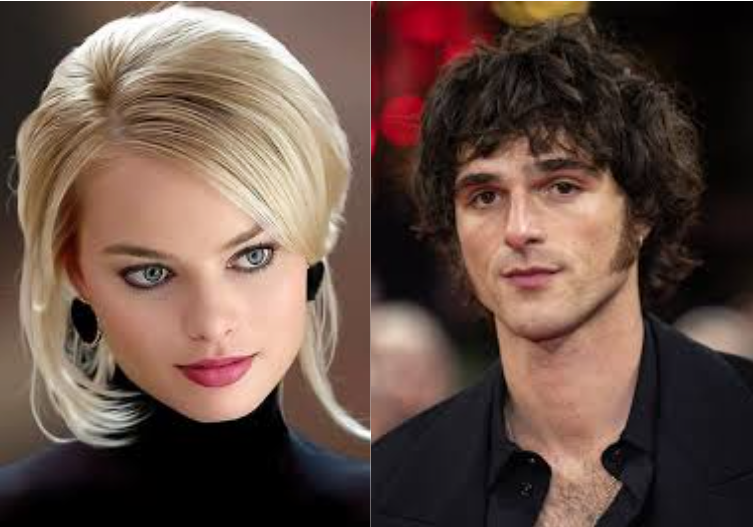
Reduce, reuse, recycle: Hollywood’s casting directors have hit pause on churning out the latest heartthrobs for the 2020’s, but not everyone is in favour of this glorified Hollywood Eco cycle. So, why are the same five faces gracing cinema screens? Do casting directors have a phobia of new faces or is the class ceiling truly impenetrable?
In September 2024, the internet went ablaze with news of Emerald Fennell, director of Promising Young Woman (2020) and Saltburn (2023), taking her turn to adapt Emily Brontë’s classic novel Wuthering Heights, but her choice of Catherine and Heathcliff was what made everyone’s ears perk up. Audiences were appalled to hear, man of the moment, Jacob Elordi, cast as Heathcliff and Margot Robbie, a noticeable Hollywood face, set to portray Catherine Earnshaw.
Talent and practicality aside, the true question is whether the two Australian stars are the right fit to play such beloved characters, considering there are around 20 adaptations of the much loved novel, fans are not jumping for joy as Hollywood tries to tackle the source material, again. This will be Fennell’s second collaboration with Elordi after they worked together on Saltburn, a rather jarring tale involving a controversial bathtub scene, but ultimately found its way onto everyone’s Letterboxd watchlist.
This is not the first time a director–actor partnership has taken shape. From Martin Scorsese and Robert De Niro to Christopher Nolan and Cillian Murphy, even Greta Gerwig and Saoirse Ronan. Cinema has long been shaped by iconic, creative duos. This latest project marks yet another reunion as Robbie worked as a producer on Fennell’s previous films, Saltburn and Promising Young Woman, alongside her executive husband, Tom Ackerley. Audiences are questioning whether producers should be allowed to cast themselves in their own films. After all, if you hold the power, why not use it? But this raises the discussion: is it confidence in one’s talent? What’s wrong with three friends sitting around and deciding to make a movie together? Or is it another case of popularity casting? Viewers aren’t just raising eyebrows anymore— they’re starting to complain. In an era hyper-aware of nepotism, gatekeeping, and industry privilege, the choice to play both puppet and puppeteer doesn’t always feel like some grand artistic vision. Sometimes, it looks like pulling strings simply because you can.
Elordi has followed the career trajectory of Robert Pattinson; being cast as a heartthrob in a teen series and then diverting to more challenging cinema, in search of ‘serious roles’, the only difference is that Elordi seems embarrassed by his Kissing Booth (2018) claim to fame. He went on to star as Nate Jacobs in Euphoria (2019), Elvis Presley in Priscilla (2023), and The Creature in Frankenstein (2025). Alongside this, audiences have been privy to his private life for years and his high-profile relationships have only intensified the spotlight. Robbie, a more seasoned actor, is something of a household name, her face is unmistakable, a blessing and, perhaps, her greatest burden. What sets her apart might just be the thing that holds her back, she is Margot Robbie, one of the most beautiful women in cinema, and fans are not sold on her being the right fit to play ‘wild and childish’ Catherine.
Elordi’s casting sparked criticism because Heathcliff is interpreted as being of non-white heritage, and his outsider status is tied to racial otherness in the novel. Critics argue that choosing a white/white passing actor effectively erases that layer of the story and misses a rare opportunity for representation, especially given the numerous past adaptations that have already cast Heathcliff as white. The primary criticism for Robbie, 35,is that she is significantly older than Catherine, who is a teenager for much of the story and dies at 19, the criticism is not only if she can convincingly pass as a teenager, but rather how the age gap weakens the emotional weight of Catherine’s premature death, which is central to the novel’s plot. Some critics and fans feel that Robbie and Elordi lack the whimsically tortured feeling necessary to play the destructive and arguably unlikeable characters of Catherine and Heathcliff, with fans citing Alison Oliver and Dev Patel as the perfect choice. Little is known about how Fennell plans to adapt the 1847 story, other than set photos released of Robbie in a modern wedding dress, leading fans to speculate what twist Fennell has conjured up.
Ultimately, audiences crave new faces, not celebrities performing the impossible trick of trying to disappear into a role. For some films, this works, but with beloved literature that has already been adapted numerous times, it’s becoming increasingly difficult to satisfy viewers. The celebrity actor model works well in certain genres, particularly in action and comedy. Take Tom Cruise: the action hero persona is his brand. When he’s running, fighting, or scaling the Burj Khalifa audiences buy it because it’s Tom Cruise doing what Tom Cruise does best. The actor who’s his own stuntman. Comedy works the same way. Adam Sandler isn’t disappearing into characters, he’s playing a character not too far away from himself, and audiences love him for it. They want his familiar humour, charm, and his circle of comedy friends on screen, not reinvention or disguise. A Complete Unknown (2024), perfectly demonstrates the trend of casting famous actors as famous figures and how it doesn’t work, Timothee Chalamet, arguably the best movie star of his generation, spent five years learning to sing, play the guitar and the harmonica, yet despite his best efforts and the hair and makeup department giving him a tired face and signature Dylan hairstyle, all you see is Timothee Chalamet playing the guitar and singing Bob Dylan’s songs.
This April, Hollywood sent another earthquake rippling through social media after the cast announcement of the much anticipated Beatles biopic.There were whispers about which Scouse lads would be chosen to portray the famous Liverpool legends, with hopes that at least one would be a true Liverpudlian, only to find that all four were already leading Hollywood’s new generation. Paul Mescal (Gladiator) as Paul McCartney, Harris Dickinson (Baby Girl) as John Lennon, Joseph Quinn (Stranger Things) as George Harrison and Barry Keoghan (Saltburn) as Ringo Starr. All of them have, at one point, held the title of Twitter’s white boy of the month, favourites among younger audiences, and strategically cast to pull in a younger demographic. And while they are undeniably talented, there’s a sigh that lingers around the North West of England, a region overflowing with unrecognised potential, because what could have been an opportunity to open the door for four talented northern boys, was kept firmly shut. Casting four unknown Scouse lads would have been an incredible opportunity, not only for Liverpool, but for the North of England as a whole, a region underrepresented in the arts and receiving less than half the cultural funding allocated to the South. London alone receives nearly twice as much arts investment as the North, and thus northern talent continues to face steep barriers when trying to break through the class ceiling.
Wuthering Heights has faced the same criticism : if it’s set in Yorkshire, why not cast actors who were born and raised there? The counter-argument, of course, is that films don’t perform the way they used to. Studios insist they need big names, not only because star power drives box-office numbers, but because recognisable actors come with proven range and a filmography that reassures studios. But that logic creates a cycle: you can’t cast unknown northern talent in major films because they lack experience, yet they lack experience because they’re never cast. The claim that there just aren’t experienced actors from Liverpool or Yorkshire in that age range, doesn’t reflect a lack of ability; it reflects a lack of opportunity.
Audiences are no longer asking “What’s it about?” but rather,“Who’s in it?” Studios are not betting on the story but on the fan base and if audiences roar, directors listen. Pedro Pascal went from a recurring character in Game of Thrones (2014) to dominating screens for the past five years, appearing in The Mandalorian (2019), The Last of Us (2023), Gladiator II (2024) and Fantastic Four (2025). His face was everywhere and audiences championed him, until it was too much. Every month his face would appear on a new poster and instead of rejoicing, viewers were asking, “Why’s this guy in everything?’
Hollywood is brutal: you never know how long you’ll be ‘the hot new thing’ before someone shinier or younger steals the spotlight. Some actors prefer a more reserved and laid back approach, Joaquin Phoenix famously doesn’t do interviews other than the odd late night appearance. Mikey Madison won the Academy Award for Best Actress for her role as Ani in Anora(2024). Unlike her peers, she took time to choose her next project. She could have been everywhere, yet she deliberately stepped back and will only return to cinema screens for The Social Network (2010) sequel, The Social Reckoning scheduled to be released next October.
It’s not just screen actors who are affected, animation has taken a hit too. Trained voice actors are being swapped out for big-name stars like Chris Pratt and Anya Taylor-Joy in the Super Mario movie. Studios increasingly prioritise recognisable faces over specialised skill, betting on star power to draw audiences rather than trusting professionals who have studied and perfected their craft for years. Studios no longer want to take a risk on a new face or voice. It was a formula that once worked, especially if the source material had a large fan base, take Lord of the Rings or Star Wars for example, each movie catapulted unknowns into worldwide fame. The most modern example of this was when Steven Spielberg came across 17-year-old Rachel Zegler through an open casting call for his adaptation of West Side Story (2021), her casting launched her acting career and she went on to star in The Hunger Games: The Ballad of Songbirds and Snakes (2023), and Snow White (2025), but after her film debut she made headlines during a red carpet interview for her second movie Shazam: Fury of the Gods (2023), when asked why she took the role she replied, “I needed a job”, her candour split audiences, some praised her frankness while others felt she was diminishing her opportunity and disrespecting her director and cast. Regardless, her words highlighted the effect of the pandemic on Hollywood, along with the pressures actors face in an industry that’s notoriously hard to break into, even if you’re already part of it.
Post-pandemic, social media now reigns over the stars, amplifying every misstep and shaping public perception in ways that were unthinkable just a decade ago. If someone is popular on socials, directors scout them for their movies, regardless of any acting ability. Ian Brennan cast media personality and singer Addison Rae in Netflix’s crime drama Monster: The Ed Gein Story (2025) and Ryan Murphy cast Queen of reality television Kim Kardashian in Hulu’s legal drama All’s Fair (2025).
Open TikTok, Instagram Reels, or YouTube Shorts, and every scroll is a rapid-fire cut of an actor. Press junkets are squashed into two-minute clips, and overtly lacking in thoughtful, probing questions, instead preferring never-have-you-ever challenges or astrology sign quizzes. Some actors opt out of promoting their work, while others are thrust into the media frenzy. Primed with the correct media training, they endure hours in a room as new journalists and social media personalities fire question after question, then appear on morning and late night talk shows like Good Morning America or The Graham Norton Show. Stars are everywhere, and it’s becoming increasingly impossible to escape them. It’s oversaturation at its finest.
Hollywood has always been a popularity contest, if you think back to every decade you’ll think of at least five or six stars. In the ’90s, it was Brad Pitt, Leonardo DiCaprio, Will Smith, Julia Roberts. Fast-forward to the 2010s, and Jennifer Lawrence, Emma Stone, Jake Gyllenhaal, and Chris Pine dominated screens. What’s changed is the rise of social media. It makes it feel as though actors are being thrust down our throats constantly, with every post, clip, and moment amplified until it drives fans crazy. Post-pandemic studios have had to reconfigure the previous Hollywood model. But it’s not just the studios, audiences have a role in this too. Every like and share helps fuel the cycle. We’re all complicit in deciding who becomes the next big thing. It’s not only Hollywood deciding who becomes a star. It’s you.
 Surround Sound Magazine
Leave a comment