By Duniya Jan
The Switch 2 has hit the market with a bang. Becoming the fastest selling console in history, the successor of Nintendo’s Switch has already become a staple in many gaming households. Thus far, the console has measured positively with high expectations held by players, competitors and even Nintendo themselves.
This may come a surprise to some, given the narrow selection of accompanying games present on the console’s release, with Mario Kart World being the only ‘new’ game immediately available. In this respect, Nintendo has adopted a rather unique marketing strategy compared to its competitors; by comparison, the Playstation 5 had over 20 titles available on launch. The other three games the Switch 2 has chosen to debut are optimised versions of previous titles, including its record-breaking Legend of Zelda: Tears of the Kingdom. Nonetheless, long-awaited games will be reaching the console in the coming months, such as the highly anticipated Tomodachi Life 2 due to release in February next year.
Though the Switch 2 aligns and far exceeds the expectations both Nintendo and many consumers had of the console, doubts were certainly raised upon its announcement. Questions of its necessity and creativity were asked of the company. Kouichi Kawamoto, producer of the Switch 2, highlighting that the Switch was not ‘perfect’ in spite of its popularity with Nintendo’s playerbase. Kawamoto, alongside technical director Takuhiro Dohta and Tetsuya Sasaki from the technology division, spearheaded the Switch 2 project.
The priority in creating the Switch 2, according to Dohta, was upgrading the processing capabilities of the console to support new game experiences. Kawamoto gave the example of Mario Kart World’s ‘seamless’ world building, allowing players to drive smoothly from one course to the next should they wish. This is a significant upgrade from previous Mario Kart titles, in which ‘tracks’ are closed from each other.
Rather than creating a new hardware base from the outset, the trio agreed that premium software was the aim of the Switch 2, given that hardware accessories could be sold as add-ons at a later date. However, the console’s hefty price tag at £395.99, combined with game pricing at over £65 per title, means many reject such additions. Regardless of players’ willingness to spend extra, these accessories seem to be enhancements, rather than essential for the Switch 2 experience.
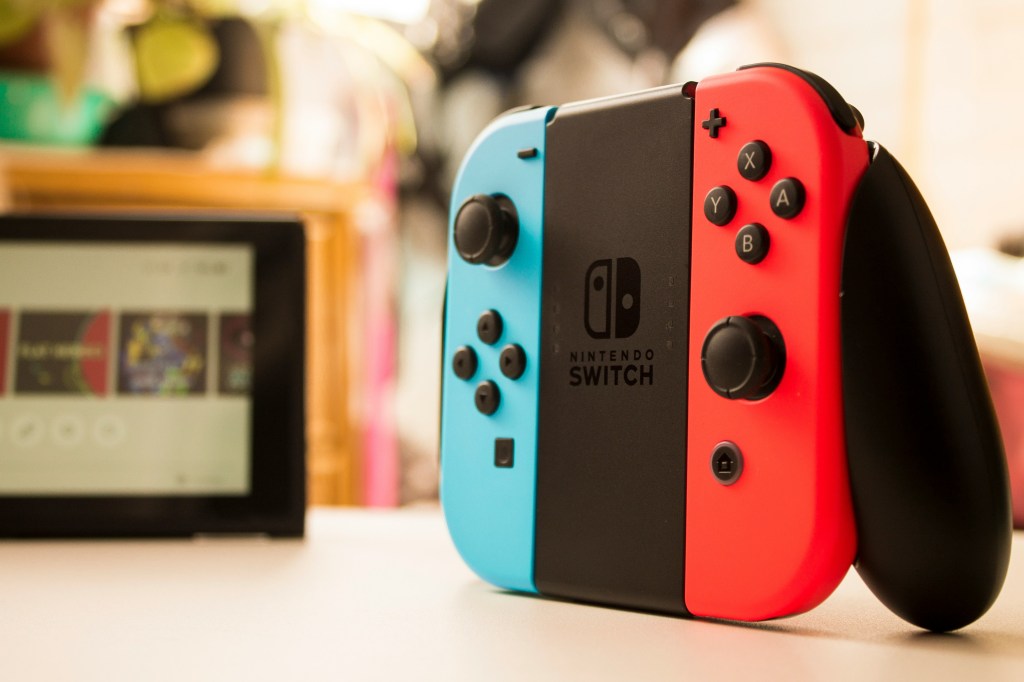
In fact, according to its developers, the Switch 2 is a complete redesign of its predecessor. Between the much-focused processing capabilities and its visual design, reworks and brand-new hardware have been incorporated into the console’s price tag. The Joy-Cons in particular have drawn much attention,with Kawamoto emphasizing a need for a smoother and more durable experience with the controllers, likely in response to criticism directed at the original Switch for poorly constructed Joy-Cons. Though we have yet to see the longevity of the upgraded controllers, buyers will likely welcome the acknowledgement by Nintendo that these were a serious issue.
In this way, perhaps it was Nintendo’s playerbase who also helped create the Switch 2. As with every console, feedback and gameplay experience are crucial in helping developers decide what to prioritise in updates. As noted by Nate Bihldorff, the Senior Vice President of Product Development & Publishing at Nintendo, the vast gaming capabilities packed into titles such as Tears of the Kingdom make it impossible to predict what boundaries players can push within the games. Like Kawamoto, Bihldorff chose to emphasise that the Switch 2, or any console, cannot be described as perfect. It is the players who will push the limits of a console and identify where it ‘breaks’, in turn sparking the developers to patch, re-design and upgrade the new content they release.
For a console that began development in 2019, the Switch 2 has moved leaps and bounds from the gaming world of the 2010s. Nintendo have expressed an interest in creating consoles outside of the Switch series in the near future. But for now, the world will watch on to see if the Switch 2 has become the ‘new standard’ the developers hoped for.
 Surround Sound Magazine