By Nikitah Tomlin
Over the past decade, our screens have been dominated by a major resurgence of the romance genre. Unrequited love, forbidden narratives, and familiar tropes have enticed a wide audience that look for some sense of escapism. Astonishingly, since the pandemic, sales in the genre have boomed. But has adaptation in the genre caused this enormous commercial boost, or are viewers seeking a nostalgic familiarity with which the genre is surrounded?
Our current romances are most certainly traceable to romances of the past. With significant roots in amatory fiction (popularised by writers Aphra Behn, Delarivier Manley, and Eliza Haywood), many common tropes are adapted from those frequented in the late 17th and early 18th centuries. In time for the release of Celine Song’s ‘The Materialists’, I decided to delve into the history of the love triangle.

‘The Materialists’ is one of the newest additions to the genre and has already received much critical commentary. The story follows an ambitious New York matchmaker (Dakota Johnson), who finds herself torn between a new (and wealthy) romantic interest (Pedro Pascal) and her (not so wealthy) ex-boyfriend (Chris Evans). Despite the cast being incredible, many have compared the film to the love triangles of Bridget Jones and Pride and Prejudice, though utilised ineffectively. But surely this trope has existed long before the Mr. Darcy’s of this world?
The OED describes a ‘love triangle’ as a situation with which ‘one person is romantically or sexually involved with two others’. Often the humour and heartbreak comes from moments of deception and naivety of those involved. The first usage of this phrase was in the 1909 La Crosse (Wisconsin) Tribune, dated at the 21st June:
“Two […] men and the pretty 20 year old missionary girl… form the love triangle the police have uncovered.”
The writer of this report coined the term we commonly use now for a love triangle of any sort. However, before this report the more common term related to a member of a marriage being involved with another person, in what was known as an eternal triangle. It was first noted figuratively in the Daily Chronicle (1907):
“Mrs. Dudeney’s novel… deals with the eternal triangle, which, in this case, consists of two men and one woman.”’
Both terms to describe the triangle are modern, but the trope seems to be widespread within ancient literature. From the playwrights of Ancient Greece to the epics of India, the concept of the love triangle is repeated. There are many that are known in Western literature, one of the earliest and most famous depictions being the tale of Paris and Helen of Troy depicted in The Iliad. The Iliad introduces a love triangle occurring amidst violence, famously portraying the Trojan War (Paris captures Helen from Menelaus, and he seeks to gain her back).
I discovered that in most cultures the love triangle holds a significant place in its literature; the Romans used the trope for its comedic value, Euripides highlighted the complexity of emotion within the triangle in his plays, Shakespeare maintained the trope as a device of both comedy and tragedy, and the Indian epics used the trope to drive their narrative. Although we may not be familiar to all of these literatures, we are familiar with what they contain:
- A central character involved and caught between two different romantic interests
- Both interests have feelings for this protagonist – they often display different personality traits and / or class differences
- Tension caused by both rivalry and misunderstandings
- Strong emotions
Writing from the earliest recognised literatures have displayed an awareness of the impact of these elements. The emotional catharsis of the trope has the ability to connect from culture to culture, both in terms of dramatism and understanding. We’re all akin to a bit of drama – I mean think Team Edward or Jacob, Damon or Stefan, or more recently, Conrad or Jeremiah! This trope has been central to our streams of entertainment for centuries. We’ve learnt for sure to not fix what’s not broken!
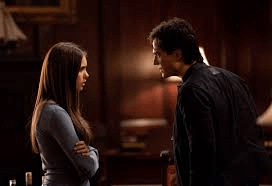
Our female-heavy influence in the romance genre spans back to the days of amatory fiction. Think Gossip Girl but the 1800s; scandalous and popular, women changed the narrative and handed their female protagonists the ability to speak freely and shape their own stories. Eliza Haywood’s ‘Fantomina; or Love in Excess’ really shows this narrative. Haywood’s protagonist, Fantomina, is interested in a man named Beauplaisir. She shifts the narrative by adopting multiple personas in order to seduce him and maintain their relationship. Although not a standard love triangle, the novella really encapsulates the female dominated sphere of the triangle. In becoming a “different” character in the eyes of Beauplaisir, she forms this sort of entanglement of desire and competes with different versions of herself, as one would with a rival. Many shows in common media display themes shared in Haywood’s novels; the love games of Sex and the City, the competition for male attention in Love Island, and the love triangles of The Materialists.
If ‘The Materialists’ was for you, I’d delve into the fiction before that paved the way. From novels to films, there is a tale of scandal and seduction for everyone.
 Surround Sound Magazine