By Grace Clift

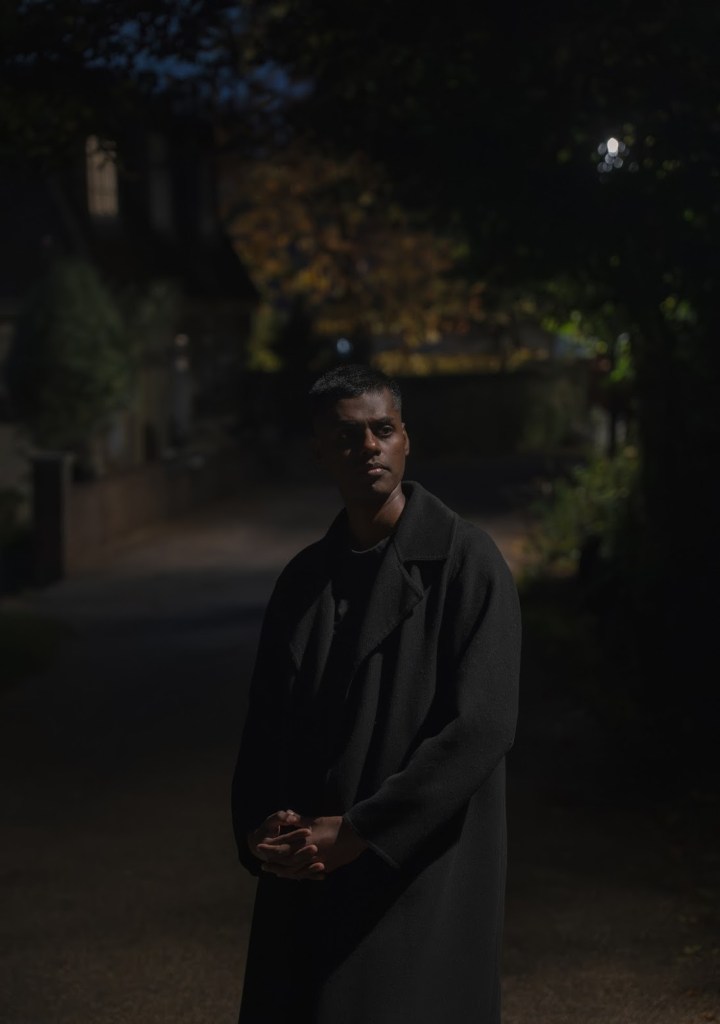
Sharon Katta has created something which transcends traditional boundaries of ‘music’. It is more of an experience – a soundscape of sorts, capturing a pivotal and painful point in his life. Death Said, Breathe is a 5-track project which is inspired by Katta’s personal life, and culminates in a cinematic 7-minute title track.
Surround Sound asked Katta about his experience working on the project, how his own life impacted the journey, and how the 100-instrument production came together.
Q: What has your journey with music been like up to this moment?
“My journey with music has never been straightforward. I didn’t grow up in a musical family. I grew up in a church environment, and that’s where I picked up instruments. I was terrible at school. I couldn’t focus at all. It was only during my undergrad that I started doing covers for YouTube, and that’s how I taught myself recording and production. Eventually I moved into writing my own music. I’m not formally trained in anything. Everything was self taught, apart from a few summer music classes as a kid on different instruments, and even those were very brief.
“Finishing songs was always the hardest part for me. I used to leave everything halfway. That’s actually why I moved to the UK. For my university application I had to complete four or five songs. Those were the first tracks I ever fully finished. They included early versions of ‘Death Said, Breathe’ and ‘Home’, which became my debut single. My influences were limited because I didn’t have that much exposure growing up, so everything I learned was through curiosity, YouTube, and trial and error.”
Q: What challenges did you face over the six years working on this project?
“The hardest part was turning the imagined piece into something real. You start with a feeling or an idea that’s abstract, and then you have to shape it into a piece of music that still carries that truth. After I finally made something I liked, the next question was, “Is this honest? Is this really documenting what happened?” As this project intended.
“So, By 2022 I had the structure and the lyrics. From there until 2025 it was all about fine tuning and making sure it went past my own quality checks. I kept rewriting string sections, reworking the percussion, and building and rebuilding the emotional arc through sound design. And then finally recording the vocals was the last mountain. I spent months redoing harmonies and ad libs. I recall, Aimee kept trying to help me reshape how certain lines were delivered, but it was tough because I had sung these ideas the same way for years. It became a process of unlearning and approaching them fresh.
“Looking back now, it feels intense but also kind of beautiful. I’m glad I took the long way.”
Q: This all began from a phone call with your sister. How did that phone call lead to creating this project? Was creating this record a healing experience?
“That phone call was the moment I realised there was more going on in my head than I had admitted to myself. I was already in a place where I didn’t want to be here anymore. I don’t know why I did it, but I thought, “Maybe I should call the one person who might actually care.”
So I called my sister. For the first minute I pretended everything was fine, just normal chatter. Then it slipped out — the same words you hear in the Prelude of the track: “I’ve always been drowning, but this time I don’t think I have anything to hold on to.” As soon as I said it, I broke. She’s younger than me by a year, but she didn’t panic or try to fix anything. She just stayed on the call and listened for the full fifteen or twenty minutes. And in that space, something shifted.
I still didn’t want to live for myself. That part was real. But suddenly I thought, “Maybe I can live for her. Maybe for my family.” It was the first time I had ever reached out, the first time I said any of this out loud. That moment became the beginning of the healing that followed.
“So was making the record healing? Not exactly. The healing happened in real life. The record is me documenting that process. The lines, the emotional shifts, the internal storms and the quiet moments all came from different points across months of trying to find a way back into living. So the project didn’t heal me, but it became the map of that journey — the fragile parts, the dark parts, and the moments where I finally started to feel a spark for life again.”
Q: How did growing up in Hyderabad influence the project? How have your childhood and life in London mixed inside this work?
“There is a lot of South Indian influence in the project. In the arrangement, the rhythm, the percussion, even the way I sing.
“In Act Two, the entire rhythm section is built around South Indian instruments like the Parai and the Dappu. These are traditionally played during death rituals. They come with a heavy and complicated history. I wanted to flip that. I believe there is so much more to that art form, and so much more to the castes and communities that carry it. In Death Said, Breathe, those same rhythms are used to celebrate life — almost like reclaiming something that has always been deeper and richer than how it has been presented.”
Throughout the project you can hear this fusion. South Indian textures woven into palettes inspired by western pop, orchestral writing, cinematic production. The blend of the two worlds I live in.
Q: Our current project is to support immigrant creatives in the UK in response to recent waves of anti-immigrant rhetoric. This is optional, but how have you felt or been affected by these changes?
“I appreciate the support, I’m really glad to hear this. My next track touches directly on this theme. It’s currently being mastered at AIR Studios, and will probably speak louder than anything I can say here.”
Q: The project is so cinematic, and unlike anything I’ve ever heard. How did the creation process differ from creating traditional music?
“Thank you, That’s very kind. So, It didn’t start with songwriting. It started with story. I wasn’t thinking in verses and choruses. I was thinking in scenes, camera angles, internal monologues, tension arcs and emotional geography. A lot of the sound design was approached like film foley.
“Most of my songs begin this way, and then I try to pull them back into something more traditional. Maybe that is why they sometimes sound a bit weird. Hopefully one day I’ll learn to write a clean, classic, structured song. But for now, this is how my brain works.”
Q: Using over 100 world instruments is extremely impressive. Was that the plan from the beginning, or did it emerge over time?
“Not at all. It started with just an electric guitar and a few lines from Act Three: “Paddle down…”
Everything else grew slowly over the years. The palette kept expanding because the writing and the story kept demanding it.”
Q: Is there any last words you’d like to share?
“If someone listens to this project, I want them to feel less alone. Not inspired. Not lectured. Not motivated. Just understood. I am grateful to still be here to tell this story. And I hope it makes someone else pause, breathe, and stay. I know it is really hard.”
Katta has created something rare to find in 2025: something truly and utterly new. To listen to Sharon Katta’s incredible project, click here.
 Surround Sound Magazine
Leave a comment