By Amy Miller
All throughout history, language has been an indispensable tool of self-expression and communication. This tool comes in many forms, not all of which are equally accessible; spoken language, for example, is used by the majority of able-bodied and fully-hearing people but is challenging for the deaf community. As a result of this inaccessibility, the community has developed a number of alternative languages, one of which is sign language. It is thought that a form of manual language existed among the very early human population, and recognised national languages such as British Sign Language, or BSL, are a result of its evolution. The process of evolution, though, is never over – for the last decade or so, research has shown that BSL has been further developing and changing in order to provide greater representation for LGBTQ+ people, leading to the establishment of the Gay Sign Variant.
GSV is a set of established signs for LGBTQ+ vocabulary and slang. Its promoters believe not only that sign language can be enriched by the presence of this vocabulary, but also that such enrichment is necessary for the proper appreciation and understanding of queerness. Therefore, specific signs have been developed and assigned to different identities under the LGBTQ+ umbrella, through which deaf people can more easily express their sexuality or gender. A glossary for these terms is provided by Deaf Rainbow UK, an organisation dedicated to furthering the cause.

Founded in 2018, Deaf Rainbow UK intends to “inform, represent, and support” the community. The project is constantly expanding. For example, in 2023 they collaborated with University College London to add a group of new terms to the glossary. It is clear, however, that more attention – and more resources – must be given to this organisation. Upon the introduction of the UCL project, 109 words were proposed to be defined and signed on the website, but a lack of significant funding meant that only the 20 most frequent words could be added. Nonetheless, the glossary remains a crucial resource for those within or wishing to learn about the intersection between deaf and queer communities. Alongside this, Deaf Rainbow UK provides educational workshops and awareness training, and attends events like Pride.
So far, my discussion of GSV has surrounded the more practical side of LGBTQ+ vocabulary, focusing on the accessibility of definitions and manual translations of queer identities. However, there is another side to the movement: that is, an attempt to incorporate gay slang and speaking patterns into sign language. This originated around the 1980s, beginning as a way for deaf gay people to communicate discreetly in the wake of the AIDs epidemic and the general struggles of queer life. Nowadays, it is less common but no less brilliant. See below two different signs for “go away”; GSV on top, and conventional BSL on the bottom.
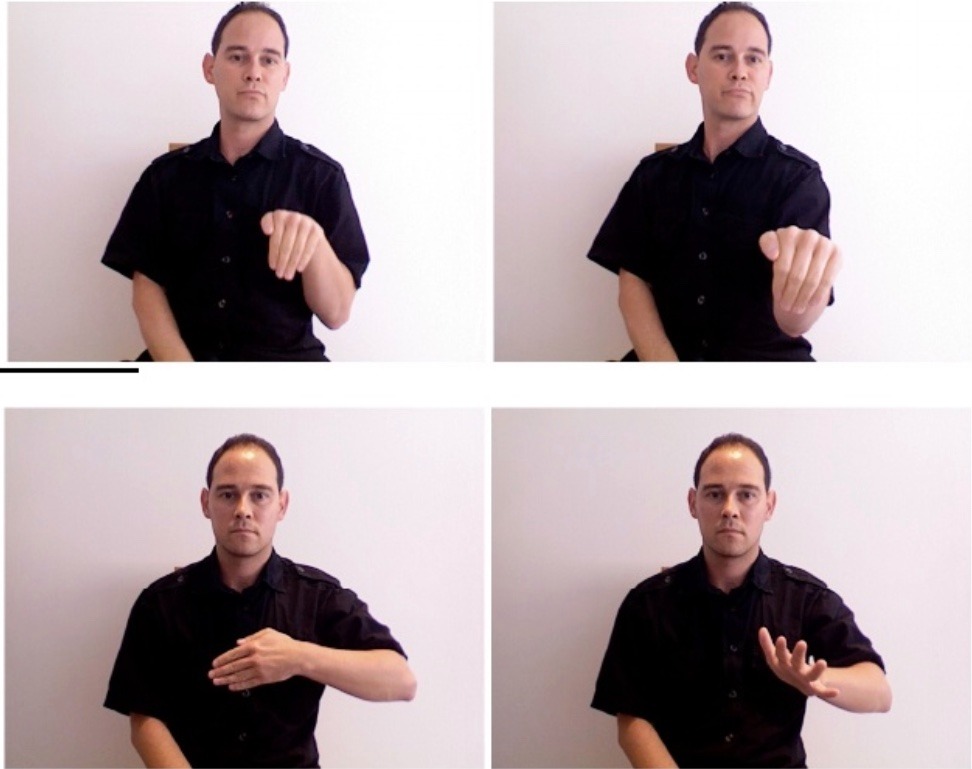
As shown here, small differences in signs have become mechanisms by which queer deaf people can express their identity and fulfil their desire to communicate in a less normative manner. In this sense, GSV is characterised by a flamboyance that may not be present in more mainstream sign languages – the difference can range from a modified hand movement to a more exaggerated facial expression. In an interview with the BBC, a drag queen named Mary referred to the language as a “more heightened way to communicate” and shared her optimism that it will survive into the far future.
Whether used to explain a person’s identity or simply to communicate vibrantly – by signing “shop” as though wearing a handbag, for example – GSV is undoubtedly freeing. By creating and maintaining this variant of BSL, queer deaf people have provided a suitable mode of expression for many generations to come, one which hasn’t been prioritised in the mainstream. My only hope is that the movement continues to thrive, and that organisations like Deaf Rainbow UK earn more respect and reach as time goes on.
 Surround Sound Magazine
Leave a comment