By Charlie Cavill
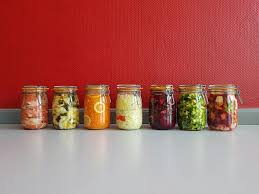
Although it may seem like a recent evolution, with supermarket shelves now stocked with everything from kefir to kombucha to kimchi, fermenting is one of the oldest ways of preserving and transforming almost every food imaginable. Over thousands of years of development, humans have harnessed the natural process of fermentation to create a surprising amount of the staple foods we consume almost every day.
Picture something like a charcuterie board with cheese, salami and bread, served with a glass of wine; the unique flavours, textures and aroma of your entire meal have been transformed in some way by the process of fermentation. However, with the variety of fermented foods and drinks available, it’s easy to become confused about what is and isn’t a fermented product.
For example, what differs a cucumber left in a vinegar-based solution from one submerged in a salty brine? And if salami is a fermented cured meat, does all meat that is cured therefore undergo fermentation? To understand these questions better, we should briefly look at what causes fermentation. When a cook prepares the food, microbes from their hands, the food and the air are captured in the fermentation vessel. When the mixture is left at the right conditions, these microbes consume sugars in the food and produce by-products that transform flavour.
Part of the reason that a loaf of bread and a block of cheese taste so different, however, is due to the variety of microbes that can cause this process. When yeast consumes sugars in flour, or the grains or fruits used to make beer and wine, it produces carbon dioxide and alcohol. This carbon dioxide is what causes bread to rise, whilst the alcohol is evaporated during the high-heat baking process. A mixture like kimchi or the milk used in cheesemaking, on the other hand, would present the perfect environment for lactobacillus bacteria that convert sugars into the lactic acid that gives these foods their distinct tang. The acidic environment created by fermentation inhibits bacterial growth, naturally preserving foods for longer. Other methods of preservation, such as vinegar pickling or curing meat in salt, were similarly developed to prevent food’s decomposition, but differ from fermentation in the lack of a microbial role in the process.
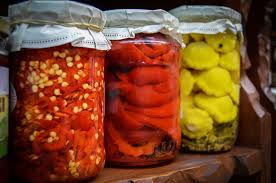
The wonder of this simple process lies in its provision of a baseline for centuries of cultural variation and innovation. Germany’s sauerkraut serves up a classic tangy fermented cabbage that couldn’t be more different from South Korea’s spicy and complex kimchi, augmented with garlic, chilli and fermented fish. This also gives an idea of how different climates, crops and livestock have influenced foods that may even predate recorded history, leading to the countless types of cheese, bread and regional alcoholic drinks that have arisen from thousands of years of cultural evolution. Whilst Italy’s Lazio region developed the sheep-milk Pecorino Romano, today it is often used relatively interchangeably with Emilia-Romagna’s Parmiggiano Reggiano, made from cow’s milk. Pisco is a brandy developed in Chile and Peru in the 16th century, distilled from the grapes brought by Spanish conquistadors – independent of France’s cognac.
A multitude of other international examples tells us how, across societies, humans have always used whatever was abundant and affordable to ferment into these essential products with their own cultural characteristics. As a method of preservation, fermented products are a further reminder of how food can reflect the historical context of its place of origin. Iceland’s hákarl and Sweden’s surströmming are two fermented fish products whose sickening smell have brought an international reputation through media challenges; however, these delicacies are a valuable insight into the cultural differences that made fermenting shark and herring, respectively, a necessary process. When fresh, the meat of the Greenland shark is poisonous; a problem discovered to be simply avoided by putting the shark meat in a gravel hole for several weeks. Thus, hákarl was born. Similarly, it is said that when 16th-century salt shortages rendered preserving herring too expensive, the lower salt concentration allowed it to ferment into surströmming, or “sour fish”, that became a valuable food for survival in times of scarcity.
Despite the ubiquity of this process throughout history, fermenting at home can still feel like a daunting task. Safety concerns, or simply the wealth of international fermented products that can be picked up from a local shop, seem to have reduced the incentive to experiment at home. However, 2020’s sourdough baking craze and growing consumer preferences for funky-flavoured foods may indicate a bubbling appeal toward home fermentation projects, provided the world of information and resources available. Being far from an expert myself, any specific guidance would be quite irresponsible; however, the world of online creators sharing their own knowledge and experimentation with safe, informed projects would be a great place to start.
@johnnykyunghwo is a British-Korean creator with a large following, sharing a variety of Korean and international projects – check out the incredible transformation of his garum, an ancient fish sauce made from fermented fish parts.
@cultured.guru is a creator with some extremely useful and creative videos, especially on the subject of the gut health benefits of fermented foods.
Kenji Morimoto is the Japanese-American author of ‘Ferment’, creating informative and entertaining content around home fermentation as @kenjcooks.
Finally, Sandor Katz has an extremely thorough book, ‘The Art of Fermentation’, that tells the story of fermentation through history, including some lesser-known regional specialities, and provides some great projects to try at home along the way.
 Surround Sound Magazine
Leave a comment