By Ruby Mitchell
What makes a movie iconic? The answer is subjective, yes – but for myself and many others, music is foundational. It shapes, extends, and sometimes even substitutes for narrative meaning. Try to imagine Psycho without its stabbing strings, or Jaws without a low, anticipatory thrum. Difficult (and possibly even nonsensical). We talk a lot about actors and directors, sometimes cinematographers, but the work of composers – those composing the film’s affective aural architecture – remains curiously veiled. Soundtrack composition is an intricate and collaborative process that begins long before any recording session and continues well into post-production.
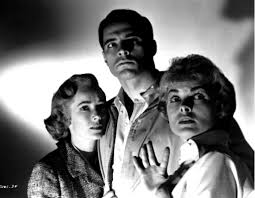
The process typically begins with a “spotting session”: a collaborative viewing of the film’s early cut (if one exists), during which, the composer and director identify cue placements, emotional trajectories, tonal modulations, and narrative inflection points. From this emerges the spotting notes – a schematic of temporal markers and affective cues that serves as the compositional scaffold.
What’s often termed the “writing” stage is, in practice, a far more architectural endeavour. For Ludwig Göransson, whose score for Oppenheimer borders on monumental, composition becomes the engineering of an emotive mechanism. As detailed in his interview with A Rabbit’s Foot, the violin – described by Göransson as the most emotionally expressive instrument – was selected to embody Oppenheimer’s volatility. For “Can You Hear The Music?”, a four-note motif formed the base; a six-note melody was layered atop it; and counterpoint followed. With each bar, the tempo increased by 20 BPM. The music, much like a bomb, accelerates towards detonation. This recursive structure recalls the Wagnerian leitmotif, a recurring tune; a mutable signifier that reflects evolving psychological states. Wagner’s innovations in the Ring cycle, where musical fragments attach to characters and ideologies, are foundational to modern scoring. Göransson’s theme, first tender, becomes fractured, synthetic, and distorted – its transformation charting Oppenheimer’s own moral disintegration. Where Wagner sought a Gesamtkunstwerk – a total artwork uniting music, image, and drama – contemporary film composers operate within a similar, if more industrialised, aesthetic system. Göransson’s score undergirds and destabilises Oppenheimer, functioning as latent narrative structure. If you want to hear more about this, definitely check out Göransson’s “Behind the Song” video from Variety – it’s incredibly interesting. https://www.youtube.com/watch?v=fWvX4M1dXss
Some composers write mini-suites, a condensed musical summary of the film’s themes, and some sketch with notation on paper before moving to digital tools. In contemporary practice, many composers generate digital “mock-ups” – sonic prototypes hewn from vast sample libraries. While once a precursor to orchestral recording, these often become the final score in lower-budget productions, meticulously engineered to simulate the acoustic. When budgets permit, orchestrators transcribe compositions into full scores for session musicians. Recording follows – intense, costly sessions in premier studios across LA, London, or Vienna. For Oppenheimer, Göransson demanded a single-take performance of a complex, tempo-fluid piece by 26 string players, each synced to a click track. A logistical ordeal, but at the same time, an immense artistic success.
The use of curated pop compilations as film adjuncts – or promotional vehicles – has also become ubiquitous in modern cinema. Albums as such exist more as marketing collateral than narrative elements, frequently confined to credits or diegetic backdrops. As “Music From and Inspired By” albums increasingly achieve cultural prominence independent of their respective films, the boundaries between traditional soundtrack and promotional artefact are slowly beginning to blur.

Beyond the orchestral lies the obscure realm of Foley, where practitioners fabricate soundscapes – stabbing melons to replicate flesh (Psycho), or capturing the canine growls of a Jack Russell to evoke the roar of a dinosaur (Jurassic Park). In A Quiet Place, sound design becomes an active narrative presence; silence itself is deliberately composed, with absences scored as intentional sonic events. Subtle textures and calibrated silences orchestrate tension, revealing sound’s capacity to embody psychological states through absence as much as presence. Even the infamous Wilhelm Scream, first used in the 1951 movie Distant Drums, deserves a footnote here – a stock audio scream recycled in hundreds of films. It’s kitsch now, but once it was a tool like any other: a shortcut and a signifier.
Soundtrack creation sits between precision and feeling – part structure and part emotion. The soundtrack sensitively sways us – shaping how we feel, often without us noticing. Its power lies precisely in this invisibility. The most effective scores work beneath the surface – embedding emotion into a film’s texture. When you feel something before you can explain why, that’s not accidental – it’s the music doing exactly what it’s meant to do.

 Surround Sound Magazine
Leave a comment